

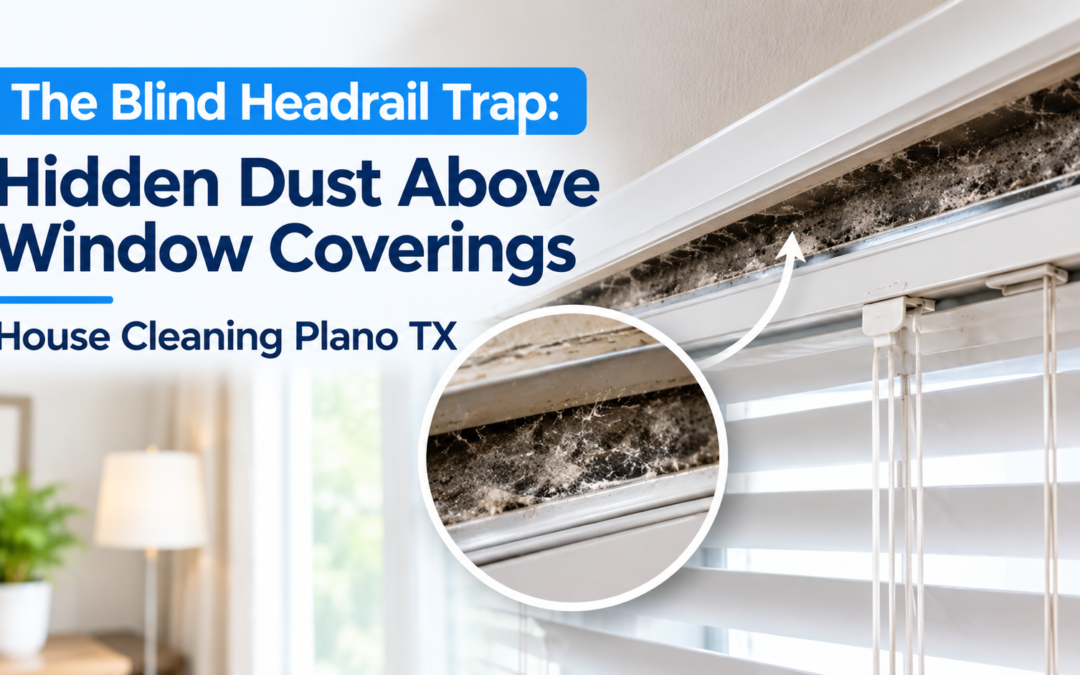
Dust often collects in places homeowners rarely think to check, and the top of a window covering is one of the easiest areas to overlook. For homeowners looking for House Cleaning Plano TX, understanding how dust builds up along blind headrails, operating mechanisms, and individual slats can make a noticeable difference in the appearance of a room. Even when windows, floors, and furniture look clean, a dusty upper rail can leave the entire window area looking unfinished. With the right cleaning techniques, you can remove hidden buildup without scratching surfaces, bending slats, or damaging delicate window coverings.
The blind headrail trap is a common household cleaning challenge because these components sit above eye level and are not always visible during routine tidying. Dust gradually settles along horizontal surfaces, gathers around brackets, and becomes trapped in narrow openings where blinds connect to their operating mechanisms. When the blinds are raised, lowered, or tilted, some of that debris can move onto nearby surfaces.
Keeping these areas clean does not always require a major cleaning project. A careful approach, appropriate tools, and a consistent maintenance schedule can help homeowners maintain a fresher-looking space while protecting their window treatments.
What Is the Blind Headrail Trap?
The blind headrail is the horizontal housing at the top of a blind system. It contains or covers important operating components that allow the blinds to move, tilt, or retract. Depending on the design, it may include cords, tilt mechanisms, brackets, internal tracks, and other small parts.
Because the headrail is positioned above the window, it can collect dust for weeks or months without attracting attention. The problem becomes more noticeable when sunlight enters the room and illuminates particles resting along the upper edge.
For homeowners comparing Plano cleaning services, this overlooked detail illustrates why a thorough cleaning routine should consider more than the surfaces people see every day.
Why Dust Accumulates Above Window Coverings
Several everyday conditions contribute to dust collecting on blinds and their mechanisms.
- Air circulation: Heating and cooling systems move air throughout the home, allowing airborne dust to settle on elevated surfaces.
- Open windows: Outdoor particles can enter through open windows and settle on nearby coverings.
- Textile fibers: Curtains, upholstery, bedding, and clothing release small fibers that can contribute to household dust.
- Cooking and daily activities: Airborne particles from cooking and ordinary household activity can travel into adjoining rooms.
- Infrequent cleaning: Because the headrail is difficult to see, it may be missed during weekly dusting.
Over time, this combination can create a visible layer of dust around the upper rail and the edges of the slats. In kitchens, airborne grease may also mix with dust, creating a film that requires more careful cleaning than loose particles alone.
Why the Headrail Matters to the Finished Look
Window coverings occupy a prominent position in a room. Even when the glass is spotless and the windowsill is clean, visible dust along the headrail can make the area look neglected.
The effect is particularly noticeable in rooms with light-colored blinds, dark window frames, or strong natural lighting. Dust may also gather around the corners and mounting brackets, creating small dark lines that stand out against otherwise clean surfaces.
For anyone seeking maid service Plano TX, these details are worth considering when evaluating the difference between basic tidying and a more detailed home cleaning routine.
Where Dust Hides on Blinds and Window Coverings
Cleaning the visible front surface of a blind is only part of the job. Dust can settle in several less obvious places, and each area may require a slightly different technique.
1. The Top of the Headrail
The upper surface of the headrail is one of the most frequently overlooked dust-collecting areas. Its horizontal position allows particles to settle naturally, particularly when the rail has a broad or flat top.
Start by inspecting the rail from a safe position where you can see its upper edge. Use a microfiber cloth or a soft dusting brush to lift away loose particles.
Avoid pushing dust into the openings where the operating components are located. If the headrail has narrow gaps, use a soft brush to remove accessible dust without forcing anything into the mechanism.
2. The Front and Underside of the Rail
The front edge may collect dust that becomes visible when viewed from across the room. The underside can also gather debris around mounting brackets, cord openings, and the points where the slats connect.
A clean microfiber cloth is usually suitable for accessible exterior surfaces. Fold the cloth into a smaller section to reach corners without applying excessive pressure.
Do not remove the headrail cover unless the manufacturer specifically allows it and you understand how it should be reattached.
3. Blind Slats and Their Edges
Individual slats provide multiple surfaces where dust can settle. Horizontal blinds are particularly prone to collecting debris along their upper edges.
Tilt the slats to expose one surface at a time. Wipe gently with a microfiber cloth or use a dedicated blind duster designed for the covering’s material.
Avoid pressing down on thin aluminum slats or twisting wooden slats out of alignment. Delicate materials can bend, crack, or lose their finish when cleaned too aggressively.
4. Brackets, Corners, and Operating Mechanisms
The corners of the headrail and the areas around mounting brackets often contain small pockets where dust gathers. These spaces may be difficult to reach with a standard cloth.
Use a soft detailing brush to loosen accessible particles. If you use a vacuum, select a low-suction setting and a suitable soft-brush attachment.
Keep cords, chains, and moving components clear of the vacuum opening. Never pull on a cord or force a brush into a mechanism to reach dust that is not easily accessible.
How to Clean Blind Headrails Without Damaging Them
The best cleaning method depends on the type of window covering you have. Wood, faux wood, aluminum, vinyl, and fabric blinds can react differently to moisture and cleaning products.
For homeowners researching house cleaning Plano Texas, a material-conscious approach is essential. The goal is to remove dust while preserving the covering’s shape, finish, and operating function.
Step 1: Identify the Material
Before cleaning, determine whether the blinds are made from real wood, faux wood, aluminum, vinyl, or fabric.
Check the manufacturer’s care instructions when available. If you cannot identify the material, begin with the least invasive method: dry dusting using a clean, soft microfiber cloth.
Do not assume that a product safe for vinyl is also appropriate for natural wood or specialty finishes.
Step 2: Prepare the Area
Close or position the blinds according to their design so that the surfaces you need to clean are accessible.
Move nearby objects away from the windowsill and protect delicate furnishings beneath the window. If you need a step stool, use one on a stable, level surface rather than stretching from a chair or leaning over furniture.
Turn off any nearby fan that could scatter loose dust while you work.
Step 3: Remove Loose Dust First
Use a microfiber cloth, soft brush, or suitable blind duster to collect loose particles from the headrail and slats.
Work from the top downward so that falling dust can be removed from the lower surfaces afterward.
For horizontal slats, gently wipe along the length of each slat. A blind duster with multiple soft fingers can help clean several slats at once, provided the tool fits without forcing them apart.
For fabric coverings, use the manufacturer’s recommended dusting method and avoid excessive rubbing, which may distort the fabric or damage its texture.
Step 4: Detail the Corners and Mechanisms
Use a small, soft brush to loosen dust from accessible corners, brackets, and exterior seams.
If necessary, follow with a vacuum fitted with a soft-brush attachment on low suction. Keep the attachment away from fragile cords and moving components.
Do not spray cleaning products directly into the headrail. Moisture can enter internal mechanisms, affect finishes, or contribute to corrosion in components that are not designed for wet cleaning.
Step 5: Spot-Clean Only When Necessary
Some headrails develop fingerprints, smudges, or sticky residue that dry dusting cannot remove.
For a compatible hard surface, lightly dampen a microfiber cloth with an appropriate cleaner. Test it on an inconspicuous area first, then wipe gently.
Avoid soaking the cloth, allowing water to pool around seams, or using abrasive pads. Natural wood and certain specialty finishes may require a specific cleaner or dry-cleaning method.
If grease has hardened around the headrail, use only a product approved for that material. Persistent buildup may be better handled by a professional cleaner familiar with delicate window coverings.
Step 6: Finish With a Visual Inspection
After cleaning, check the top edge, front face, corners, slats, and windowsill.
Look at the window from different angles, particularly where sunlight reveals remaining dust. If the covering has a cord or tilt mechanism, operate it gently to confirm that it moves as expected.
This final inspection helps ensure that the window area looks consistently clean rather than simply dust-free from one viewpoint.
Common Blind-Cleaning Mistakes to Avoid
A rushed cleaning session can cause damage that is more difficult to correct than the original dust buildup.
Using Too Much Water
Excessive moisture can damage natural wood, leave marks on certain finishes, and enter mechanical components. It may also cause some fabric coverings to develop water spots.
Use dry dusting for routine maintenance and minimal moisture only when the material allows it.
Spraying Cleaner Directly Onto the Blinds
Direct spraying can allow liquid to run into seams, cord openings, and internal mechanisms. It can also leave uneven residue on slats.
Apply a compatible cleaner to a cloth instead, following the manufacturer’s instructions.
Using Abrasive Tools
Rough sponges, stiff brushes, and abrasive powders may scratch metal, dull painted surfaces, or damage protective coatings.
Choose soft microfiber cloths and gentle brushes designed for delicate surfaces.
Ignoring the Headrail During Regular Cleaning
Cleaning the slats while leaving the upper rail untouched allows dust to remain visible above the window covering.
Include the headrail in your regular dusting routine so that the entire window area receives attention.
Pulling or Disassembling the Mechanism
Blind systems contain small parts that may be difficult to reinstall correctly. Removing covers or pulling on cords without understanding the design can cause operating problems.
Clean accessible exterior surfaces and consult the manufacturer or a qualified professional when internal components need attention.
How Often Should You Clean Blind Headrails?
The ideal schedule depends on your household, the room, and how quickly dust accumulates.
As a practical starting point, lightly dust accessible headrails and slats every one to two weeks. Homes with pets, frequent cooking, open windows, or heavier indoor dust may benefit from more frequent attention.
A deeper inspection and detail cleaning can be performed monthly or as needed, depending on the condition of the coverings and the manufacturer’s care recommendations.
Consider these maintenance habits:
- Dust the headrail whenever you clean the surrounding window area.
- Include blind slats in weekly or biweekly dusting.
- Inspect kitchen blinds for sticky residue more frequently.
- Check guest rooms and rarely used spaces periodically, even when they appear clean.
- Clean windowsills after dusting the coverings to remove fallen particles.
- Address visible buildup early rather than waiting until it becomes difficult to remove.
If you already schedule recurring cleaning Plano, ask whether accessible blind dusting can be included in the service plan. Confirm which surfaces are covered, since detailed blind cleaning may be treated differently from standard dusting.
How the Blind Headrail Trap Fits Into a Complete Home Cleaning Routine
A clean room depends on the condition of both visible and overlooked surfaces. The headrail is only one example of an elevated area that can affect the overall appearance of a home.
Other areas worth including in a detailed cleaning checklist include ceiling fan blades, the tops of door frames, curtain rods, picture frame ledges, cabinet tops, and light fixture exteriors.
These surfaces are often outside the normal line of sight, which makes them easy to forget during everyday cleaning. Addressing them systematically helps prevent dust from accumulating unnoticed.
For homeowners comparing residential cleaning Plano options, it can be useful to ask prospective providers how they handle detailed dusting and whether service packages can accommodate specific household priorities.
A cleaning company Plano TX may offer different levels of service, from routine maintenance to more intensive cleaning. Understanding those differences helps you choose an option that matches your home’s condition and your expectations.
When Professional Cleaning Makes Sense
Professional assistance may be helpful when blinds cover large windows, extend above difficult-to-reach areas, or contain delicate materials that require specialized care.
It can also be worthwhile when dust has mixed with cooking grease or other residue and simple dry dusting no longer produces a clean result.
Homeowners considering professional cleaners Plano can ask about the tools used for blind dusting, the materials the team is comfortable handling, and whether headrails and slats are included in the service.
A deep cleaning Plano TX appointment may provide an opportunity to address overlooked details throughout the home, although the exact tasks included will depend on the provider’s package.
If you are preparing to move, these details can also matter. People arranging move out cleaning Plano or move in cleaning Plano TX may want to confirm whether accessible window coverings are included in the checklist, particularly when dust is visible around the rails and brackets.
For apartments, apartment cleaning Plano services can help maintain compact spaces where window treatments, furniture, and other surfaces sit close together. In work environments, office cleaning Plano TX and commercial cleaning Plano plans may also benefit from consistent dusting of accessible window coverings, depending on the building’s needs.
Other specialized services, such as post construction cleaning Plano, may be necessary when renovation work leaves fine dust on window treatments and surrounding surfaces. If dust has settled into carpet fibers beneath the windows, carpet cleaning Plano TX may be a separate consideration.
The right service depends on the condition of the property, the type of covering, and the level of detail required.
Choosing a Cleaning Service That Pays Attention to Details
When evaluating cleaning providers, look beyond the advertised price and consider how clearly the company explains its services.
A homeowner searching for best cleaners in Plano TX may want to compare cleaning checklists, scheduling options, customer feedback, and the company’s approach to delicate surfaces.
Likewise, someone seeking affordable maid service Plano should verify what is included in the quoted price instead of assuming that every detail is covered.
The same principle applies when comparing a top cleaning company Plano Texas with smaller independent providers. Ask whether the team follows a consistent process, brings suitable cleaning tools, and understands the difference between dry dusting and damp cleaning.
If you need a fast appointment, check whether same day cleaning Plano TX is available rather than assuming that every company can accommodate an immediate request.
Homeowners who prioritize environmentally considerate products can ask about eco friendly cleaning Plano options. Product suitability still matters, however; a plant-based cleaner is not automatically safe for every wood finish, fabric, or blind mechanism.
Ultimately, reliable house cleaning services in Plano TX should provide clear expectations, consistent work, and appropriate care for the surfaces being cleaned. If you are comparing a professional maid service near Plano Texas, ask whether the provider can tailor its checklist to include overlooked window details.
For households looking for affordable deep cleaning services in Plano, it is also important to clarify whether detailed dusting is part of the package or an additional service. Those preparing for a move should confirm the same details when booking a move out cleaning service in Plano TX.
Above all, choose trusted home cleaners in Plano Texas who communicate clearly about their methods, service limitations, and the care required for your particular window coverings.
Keep Your Window Coverings Looking Their Best
The blind headrail trap may seem like a minor cleaning concern, but it can make a noticeable difference in how finished and well-maintained a room appears. Dust around the upper rail, brackets, slats, and operating mechanisms can remain hidden until sunlight or a closer inspection reveals it.
The solution is a consistent, material-appropriate cleaning routine. Start with dry dusting, use soft tools, limit moisture, and avoid forcing cleaning products or equipment into delicate mechanisms. With regular attention, you can prevent ordinary dust from becoming a stubborn buildup.
For homeowners seeking House Cleaning Plano TX, maintaining clean window coverings is one practical way to improve the overall appearance of a living space. Whether you handle routine dusting yourself or arrange professional assistance, paying attention to these overlooked surfaces helps create a cleaner, more polished home from top to bottom.
Contact us at 972–254–8858 or visit https://dustbunniesinc.net/plano-tx/ to book your service.