

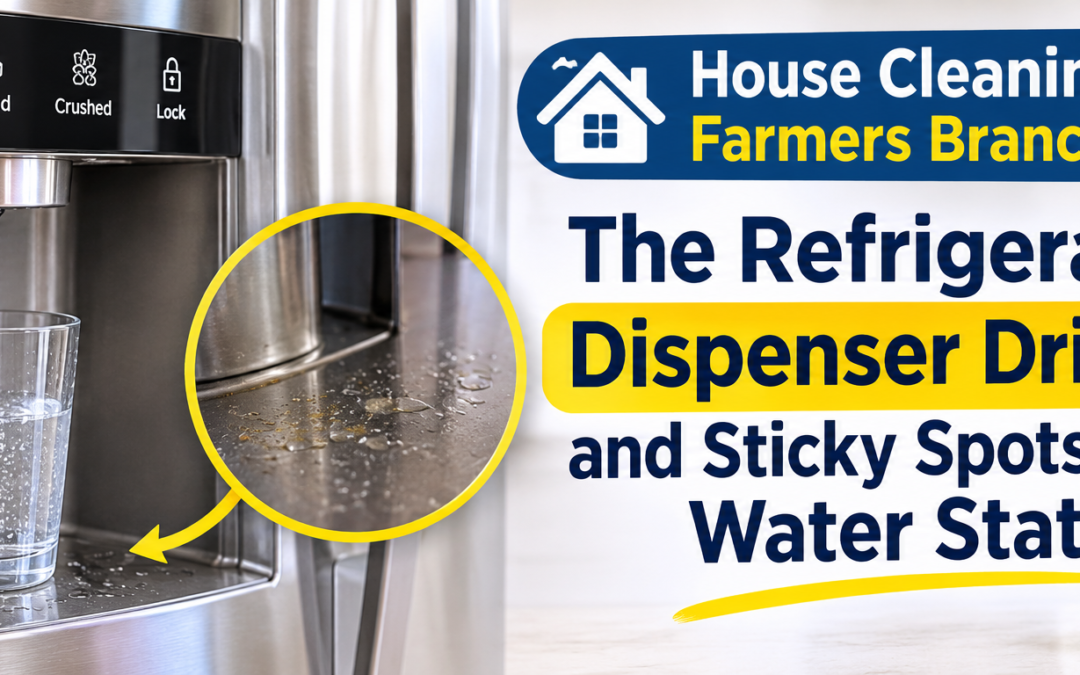
The refrigerator water dispenser is one of the most frequently used features in a busy kitchen, but it is also one of the easiest areas to overlook during routine cleaning. For homeowners searching for House Cleaning Farmers Branch TX, keeping this small space clean involves more than wiping away visible fingerprints. Dried water droplets, mineral residue, sticky spots, and splashes can accumulate around the dispenser, creating a surface that looks less than fresh even when the rest of the refrigerator is spotless.
Every time someone fills a glass or water bottle, a few drops may fall onto the dispenser tray or surrounding surfaces. Water can also cling to the nozzle, drip from a glass, or collect in narrow corners. When these droplets dry, they may leave mineral deposits behind. If hands touch the dispenser frequently, fingerprints and everyday grime can add another layer of buildup.
The good news is that maintaining a clean refrigerator dispenser does not require complicated tools or harsh chemicals. With the right approach, homeowners can remove everyday residue, care for delicate finishes, and reduce the likelihood of sticky buildup returning.
For families comparing Farmers Branch cleaning services, the refrigerator dispenser is a useful example of why detailed kitchen cleaning matters. Small areas that receive constant use deserve attention just as much as countertops, cabinet fronts, and appliance handles.
What Is the Refrigerator Dispenser Drip Trap?
The refrigerator dispenser drip trap refers to the small areas around a refrigerator’s water and ice dispenser where droplets, residue, and everyday grime accumulate. These areas commonly include the dispensing nozzle, surrounding panel, drip tray, recess, and nearby buttons or touch controls.
Although the drip tray is designed to catch small spills, it does not always prevent water from reaching every surface. Drops may splash onto the panel, run along the edges, or remain in corners where a cloth cannot easily reach.
As water evaporates, minerals naturally present in the water may remain behind. Depending on the local water supply and the refrigerator’s design, this residue can appear as faint white spots, cloudy marks, or a rough film.
Why the Dispenser Gets Dirty So Quickly
Several everyday habits contribute to dispenser buildup:
- Repeated dripping: Small amounts of water escape after a glass is removed.
- Frequent contact: Fingers touch dispenser buttons, levers, and surrounding panels.
- Splashing: Water hits the tray or panel when bottles and glasses are positioned incorrectly.
- Mineral deposits: Evaporating water leaves dissolved minerals behind.
- Limited attention: The dispenser may be overlooked when homeowners wipe down larger kitchen surfaces.
Over time, these factors can make the dispenser look dull or feel sticky. The residue may be especially noticeable on stainless steel, glossy plastic, and dark appliance finishes.
The dispenser is also a high-contact area. Regular cleaning helps remove ordinary grime and keeps the refrigerator looking well maintained.
Understanding Dried Water Droplets and Mineral Residue
Not every mark around a refrigerator dispenser has the same cause. Understanding the difference between water spots, mineral deposits, and sticky residue helps you choose an appropriate cleaning method.
Dried Water Droplets
Fresh water droplets are usually easy to remove with a soft cloth. The problem begins when droplets remain on the surface and dry repeatedly.
The resulting marks may be visible under kitchen lighting, particularly on polished or dark finishes. Wiping the area dry after cleaning and addressing spills promptly can help reduce these marks.
Mineral Deposits From Hard Water
Water contains varying amounts of dissolved minerals. When water evaporates from a surface, some of those minerals may remain behind as visible deposits.
Mineral residue can appear as pale spots, streaks, or a cloudy film around the dispenser opening and tray. Repeatedly wiping the area with a dry cloth may not remove established deposits because the residue has already dried onto the surface.
Before treating mineral buildup, check the refrigerator manufacturer’s care instructions. Some finishes tolerate mild cleaning solutions, while others can be damaged by acidic products, abrasive pads, or excessive scrubbing.
Sticky Residue From Everyday Use
Sticky spots may come from more than water. Beverage splashes, food residue on hands, and grime transferred from frequently handled surfaces can collect around the dispenser.
These spots may feel tacky even after the water has evaporated. A suitable mild cleaner and a soft microfiber cloth are usually a better starting point than aggressive scrubbing.
If the dispenser has a built-in ice chute, inspect the surrounding accessible surfaces for residue without reaching into the mechanism. Ice and water systems contain components that should be cleaned according to the appliance manufacturer’s instructions.
How to Clean a Refrigerator Water Dispenser Safely
Cleaning a refrigerator dispenser requires a little more care than wiping an ordinary countertop. The area contains electrical controls, water outlets, and components that should not be soaked.
The safest approach is to use minimal moisture, gentle pressure, and cleaning products approved for the appliance’s surfaces.
Step 1: Check the Manufacturer’s Instructions
Before cleaning, consult the refrigerator’s user manual for recommendations about the dispenser panel, tray, nozzle, and ice chute.
Different refrigerators use different materials and designs. Stainless steel, coated metal, plastic, and touch-sensitive panels may require different care.
If the manufacturer recommends a particular cleaner, follow those instructions. Avoid assuming that a product safe for kitchen counters is automatically appropriate for the dispenser.
Step 2: Prepare Gentle Cleaning Supplies
Gather the following items:
- A soft microfiber cloth
- A second clean cloth for drying
- A small, soft detailing brush, if suitable for the surface
- A mild cleaner approved for the refrigerator’s finish
- A small amount of clean water for dampening the cloth
Avoid abrasive scrubbers, scouring powders, and rough brushes. These can scratch plastic, dull polished surfaces, or damage protective coatings.
Do not spray liquid directly onto buttons, touch panels, dispenser openings, or electrical components. Instead, apply the appropriate amount of cleaner to the cloth.
Step 3: Remove Loose Residue First
Begin by wiping away visible droplets, dust, and loose grime from the accessible exterior surfaces.
Work from the upper part of the dispenser panel toward the drip tray. This helps prevent loosened residue from falling onto areas you have already cleaned.
Use gentle strokes around the nozzle and surrounding edges. Do not insert a cloth or brush into openings where it could leave fibers behind or disturb internal components.
Step 4: Clean the Panel and High-Contact Areas
Lightly dampen the microfiber cloth with an approved cleaning solution. Wipe the surrounding panel, dispenser buttons, accessible handles, and other frequently touched surfaces.
Use a separate clean section of the cloth as needed so that residue is not spread from one area to another.
For narrow exterior seams, a soft detailing brush may help loosen debris if the manufacturer permits it. Do not force tools into gaps or attempt to remove parts that are not designed for routine user cleaning.
If the dispenser includes a touch-sensitive panel, follow its specific care instructions and use minimal moisture.
Step 5: Address Mineral Spots Carefully
If dried mineral spots remain, avoid immediately reaching for vinegar, descaling agents, or other acidic cleaners. Although certain surfaces may tolerate these products, acids can damage some finishes and appliance materials.
Check the manufacturer’s guidance first. If an approved cleaning method is available, apply it to the cloth rather than spraying it into the dispenser area.
Use gentle wiping rather than vigorous scrubbing. Persistent deposits may require a manufacturer-approved procedure or professional assistance, particularly when they are inside the water outlet or another internal component.
Step 6: Clean the Drip Tray
The drip tray often collects water, small splashes, and mineral residue. If the tray is designed to be removable, take it out according to the manufacturer’s instructions.
Wash it using the recommended method, rinse if appropriate, and dry it thoroughly before reinstalling it.
If the tray is not removable, wipe its accessible surfaces carefully with a lightly dampened cloth. Do not pour water into the recess or allow liquid to run into the refrigerator’s controls.
Step 7: Dry and Inspect the Area
Finish by wiping the cleaned surfaces with a dry microfiber cloth. Pay particular attention to the dispenser panel, surrounding edges, and tray.
Check the area under good lighting to see whether streaks or residue remain. A final dry wipe can improve the appearance of the finish and reduce new water spots.
If you notice water continually leaking from the nozzle, persistent pooling, or moisture returning when the dispenser is not being used, investigate the cause. A cleaning routine will not fix a faulty valve, damaged seal, or other mechanical problem.
Common Refrigerator Dispenser Cleaning Mistakes to Avoid
A few seemingly convenient cleaning habits can create more problems than they solve.
Spraying Cleaner Directly Into the Dispenser
Direct spraying can allow liquid to enter buttons, controls, openings, or internal components. Applying cleaner to a cloth provides better control over the amount of moisture used.
Using Abrasive Materials
Steel wool, rough scouring pads, and abrasive powders may scratch appliance finishes. Once damaged, some surfaces can become more difficult to maintain.
A soft microfiber cloth is a safer first choice for routine cleaning.
Using Strong Chemicals Without Checking Compatibility
Bleach, acidic descalers, and other strong products are not automatically suitable for refrigerator dispensers. They may damage finishes or leave unwanted residue.
Never mix cleaning chemicals. Always follow the product label and the appliance manufacturer’s instructions.
Ignoring the Drip Tray
Cleaning only the visible front panel leaves an important source of residue untreated. The tray should be included in the routine whenever its design allows safe access.
Overlooking Persistent Leaks
If the dispenser repeatedly leaves puddles despite careful cleaning, the issue may be mechanical rather than cosmetic. Check the manufacturer’s troubleshooting guidance or contact a qualified appliance technician.
How Often Should You Clean the Refrigerator Dispenser?
The ideal cleaning schedule depends on how frequently the dispenser is used, the amount of visible buildup, and the type of water supplied to the refrigerator.
A practical routine for many households includes the following:
- Daily or as needed: Wipe away noticeable splashes and fresh droplets.
- Weekly: Clean the accessible dispenser panel, buttons, and drip tray.
- Every few weeks: Inspect corners and edges for dried residue or mineral spots.
- As recommended by the manufacturer: Clean internal water and ice components, replace filters, and perform other maintenance tasks.
These are general guidelines rather than universal requirements. A busy household may need to wipe the dispenser more often, while a lightly used refrigerator may require less frequent attention.
The important habit is consistency. Fresh droplets are generally easier to remove than deposits that have dried repeatedly over several weeks.
Keeping the Entire Kitchen Cleaner
The refrigerator dispenser is only one of many small kitchen areas that collect everyday residue. A comprehensive routine should include frequently touched surfaces and narrow spaces that are easy to miss.
Other Kitchen Areas Worth Checking
Consider adding these areas to your cleaning checklist:
- Refrigerator handles and door edges
- The rubber door gasket and its accessible folds
- Cabinet pulls and the surrounding cabinet fronts
- The edges around the kitchen faucet
- Backsplashes behind frequently used appliances
- Countertop corners where crumbs accumulate
- The microwave handle and exterior control panel
- The floor beneath accessible appliance edges
Each surface needs an appropriate cleaning method. For example, rubber gaskets may require gentle wiping, while stainless steel often benefits from cleaning in the direction of its grain.
Avoid pulling heavy appliances out of position unless it is safe to do so. Electrical connections, water lines, and flooring can be damaged by improper movement.
Why Small Details Matter
A kitchen may look tidy when its countertops are clear, but overlooked spots can make the room appear less polished.
The refrigerator dispenser receives frequent use throughout the day. Keeping it clean helps maintain the appliance’s appearance and makes routine kitchen upkeep more manageable.
When small cleaning tasks become part of a regular schedule, they are less likely to turn into time-consuming projects.
When Professional Kitchen Cleaning May Help
Some homeowners have enough time to maintain their kitchens independently. Others find it difficult to keep up with detailed cleaning while balancing work, family responsibilities, and everyday activities.
Professional assistance may be useful when grease, dust, and residue have accumulated across multiple kitchen surfaces or when a home needs a more thorough cleaning.
If you are comparing cleaning company Farmers Branch TX options, ask about the specific tasks included in the service. A general kitchen cleaning may cover countertops, appliance exteriors, and accessible surfaces, but detailed dispenser cleaning may depend on the provider’s checklist.
Routine Cleaning for Busy Households
For families looking for residential cleaning Farmers Branch, a consistent maintenance plan can help keep kitchens, bathrooms, living spaces, and floors in better condition.
A regular appointment may also make it easier to address small areas before buildup becomes difficult to remove.
Homeowners comparing professional cleaners Farmers Branch should discuss the areas that matter most, including refrigerator handles, dispenser panels, cabinet fronts, and other high-contact surfaces.
Deep Cleaning for Accumulated Buildup
Routine cleaning helps maintain a home, while a deeper cleaning appointment can provide additional attention to neglected areas.
If you are researching deep cleaning Farmers Branch TX, ask whether the service includes detailed appliance exteriors, accessible edges, and other areas that receive frequent use.
Deep cleaning does not necessarily include internal appliance repairs or specialized maintenance. Confirm the scope before scheduling, particularly if you have persistent mineral deposits or a dispenser that appears to be leaking.
Cleaning for Apartments, Offices, and Commercial Properties
Different properties have different cleaning requirements.
For renters and property managers, apartment cleaning Farmers Branch may help maintain a clean kitchen between busy workdays or before a change of occupancy.
Businesses that provide shared refrigerators or break-room water stations may benefit from office cleaning Farmers Branch TX or commercial cleaning Farmers Branch services. High-contact surfaces in shared kitchens often require a clear cleaning schedule, appropriate products, and attention to frequently touched controls.
Following remodeling work, post construction cleaning Farmers Branch may help address fine dust and residue throughout the property. Appliance cleaning should be performed only when the refrigerator and its surrounding area are ready for safe cleaning.
If the home’s kitchen is part of a larger maintenance project, carpet cleaning Farmers Branch TX may also be relevant for nearby carpeted rooms or other applicable flooring. Carpet cleaning is a separate service, so confirm what is included in the overall appointment.
Choosing a Cleaning Schedule That Fits Your Needs
The right schedule depends on your home’s size, the number of people using the kitchen, and how much maintenance you can comfortably manage.
A recurring plan can help prevent small tasks from being forgotten. Homeowners interested in recurring cleaning Farmers Branch can ask about visit frequency and which kitchen details are covered.
For some households, weekly cleaning Farmers Branch TX provides a useful rhythm for maintaining busy spaces. Others may prefer a different frequency based on their needs and budget.
When comparing maid service Farmers Branch TX, look for clear communication, a defined checklist, and flexibility when specific areas need extra attention.
If you need a quick appointment, same day cleaning Farmers Branch TX may be worth asking about, although availability depends on the provider’s schedule.
Homeowners seeking eco friendly cleaning Farmers Branch can ask whether suitable lower-impact products are available for their surfaces. Product selection should still prioritize appliance compatibility and safe use.
Balancing Quality and Cost When Hiring Cleaners
Price is important, but the lowest advertised rate does not always represent the best value. The scope of work, appointment length, reliability, and service quality all matter.
If you are searching for affordable maid service Farmers Branch, compare what each provider includes in its standard visit and whether detailed kitchen tasks cost extra.
Online searches may lead you to businesses described as the best cleaners in Farmers Branch TX or the top cleaning company Farmers Branch Texas. Rather than relying on promotional descriptions alone, review customer feedback and ask direct questions about the cleaning process.
You can also evaluate providers advertising reliable house cleaning services in Farmers Branch TX, a professional maid service near Farmers Branch Texas, or affordable deep cleaning services in Farmers Branch by asking about service consistency, product use, and scheduling policies.
If you are preparing to leave a property, compare the scope of move out cleaning Farmers Branch services before booking. Ask whether the refrigerator exterior and accessible dispenser surfaces are included, especially if the property has specific move-out requirements.
For a new home, move in cleaning Farmers Branch TX may help prepare accessible kitchen surfaces before you settle in. If you need a more targeted service, a move out cleaning service in Farmers Branch TX can be evaluated against your property’s requirements and the provider’s checklist.
Ultimately, trusted home cleaners in Farmers Branch Texas should be able to explain what they clean, what falls outside their service, and how they handle special requests.
Preventing the Refrigerator Dispenser Drip Trap From Returning
Once the dispenser is clean, a few simple habits can help keep it that way.
Wipe fresh droplets promptly. A quick pass with a soft cloth can prevent water from drying repeatedly on the same surface.
Empty and clean the tray regularly. Do not allow standing water or residue to accumulate when the tray requires attention.
Position glasses carefully. Keeping the container close to the outlet while dispensing can reduce splashing. Follow the refrigerator’s instructions for using the water and ice dispenser.
Keep high-contact areas on your checklist. Include the dispenser buttons, handle, and surrounding panel in your regular kitchen cleaning routine.
Follow the appliance’s maintenance schedule. Water filters, internal components, and ice systems may have separate care requirements. Use the manufacturer’s instructions rather than relying on a general household cleaning method.
Investigate recurring moisture. If water continues to pool after the area has been dried, check for a possible appliance issue rather than repeatedly cleaning the same spot.
These habits take little time but can make a noticeable difference in the appearance of a frequently used kitchen appliance.
Keep Your Kitchen Fresh With House Cleaning Farmers Branch TX
The refrigerator dispenser drip trap is a small cleaning problem with an easy-to-overlook cause: repeated water droplets, mineral deposits, and everyday contact gradually leave residue around a frequently used appliance feature.
With gentle cleaning, minimal moisture, and regular drying, homeowners can maintain the dispenser without relying on harsh chemicals or abrasive tools. Checking the manufacturer’s instructions is especially important because dispenser panels, finishes, and internal components vary between refrigerator models.
For households looking for House Cleaning Farmers Branch TX, this small task highlights the value of a detailed kitchen cleaning routine. A clean refrigerator exterior, fresh dispenser panel, and well-maintained drip tray help the kitchen look more polished and make everyday maintenance easier.
Dust Bunnies can be part of your home-cleaning plan when you need help maintaining the kitchen and other frequently used spaces. Ask about the available services, confirm the cleaning checklist, and identify any areas that deserve additional attention.
A fresher kitchen starts with consistent habits and thoughtful attention to the details. By addressing the refrigerator dispenser drip trap before residue builds up, you can keep one of the busiest spots in your kitchen cleaner, more presentable, and easier to maintain.
Contact us at 972–254–8858 or visit https://dustbunniesinc.net/farmers-branch/ to book your service.