
You probably wash your dishes, change your towels, and clean your countertops regularly. But when was the last time you actually washed your mop?
If you can’t remember, you’re not alone.
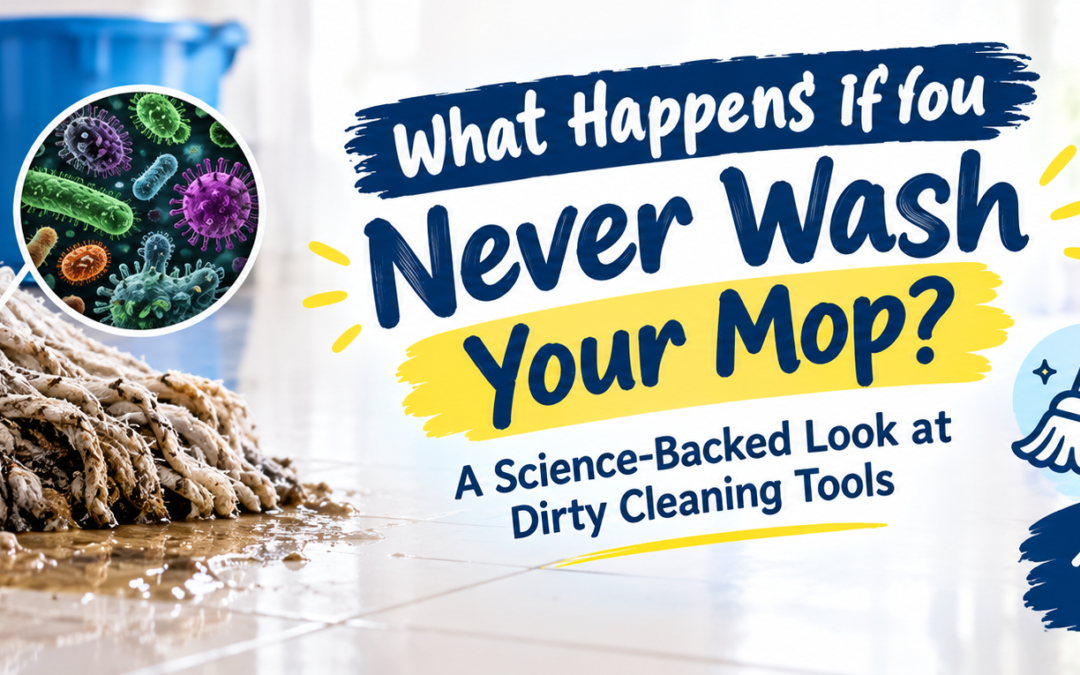
A mop is designed to pick up dirt, grease, food particles, dust, and other debris from your floors. But after repeated use, all of that material doesn’t simply disappear. It can remain trapped in the mop head, where moisture and leftover organic material create an environment where microorganisms can multiply.
For homeowners who rely on House Cleaning Arlington TX services, keeping cleaning tools sanitary is just as important as cleaning the surfaces themselves. After all, what’s the point of cleaning your floor if the tool you’re using is carrying yesterday’s dirt into today’s room?
Let’s take a closer look at what happens when a mop never gets properly cleaned, why leaving it damp makes the problem worse, and how to keep your cleaning tools from becoming one of the dirtiest things in your home.
Your Mop Is a Dirt Collector — By Design
A mop is supposed to get dirty.
That’s its job.
Every time you mop a floor, the mop head collects whatever is sitting on the surface. Depending on the room, that could include:
- Dust and dirt
- Food particles
- Grease
- Pet hair
- Skin flakes
- Mud
- Cleaning-product residue
- Outdoor debris
- Microscopic organisms
The problem begins after you’re finished cleaning.
If the mop gets rinsed quickly and then left wet in a bucket, closet, or corner, the cleaning process doesn’t necessarily end. The mop remains loaded with whatever it picked up from the floor.
Instead of a cleaning tool, it can become a storage place for contamination.
Why Moisture Is the Real Problem
A dirty mop isn’t automatically a disaster.
A wet, dirty mop sitting around for hours or days is much more concerning.
Microorganisms generally need certain conditions to grow and reproduce, and moisture is one of the most important factors. A damp mop head provides exactly what many microorganisms need: water, organic material, and time.
Think about what happens inside a wet mop.
It contains:
- Moisture
- Trapped particles
- Warmth, depending on where it is stored
- Limited airflow
- Time
That’s not a great combination for something that’s supposed to clean your home.
This is one reason professional Arlington cleaning services don’t simply use the same dirty tools throughout an entire home without properly maintaining or replacing them.
The Mop Can Start Smelling Before You Notice the Problem
Have you ever opened a cleaning closet and immediately smelled something sour or musty?
Your mop may be responsible.
That unpleasant odor isn’t necessarily coming from the cleaning solution. It can result from microorganisms breaking down organic material trapped in the mop fibers.
The mop may have started its life smelling fresh.
After repeated use, it can develop an odor that says something very different:
“I need to be cleaned.”
And adding more floor cleaner doesn’t necessarily solve the problem.
If the mop head itself is contaminated, fragrance can temporarily cover the smell without addressing its source.
You’re Spreading More Than Dirt
Here’s the uncomfortable part.
When you use a dirty mop, you’re not simply moving visible dirt around.
You’re also potentially redistributing microorganisms and organic residue across the floor.
Imagine cleaning your kitchen floor.
You begin near the refrigerator.
The mop picks up food particles and whatever else has accumulated there.
You move into the dining area.
Then the hallway.
Then the living room.
If you’re using a contaminated mop head and dirty water, you’re potentially transporting whatever was collected in one area into another.
That’s why professional house cleaning Arlington Texas teams pay attention to cleaning-tool hygiene, not just the appearance of the floor.
Dirty Mop Water Makes the Problem Worse
A mop head is only part of the equation.
The bucket matters, too.
When you repeatedly dip a dirty mop into the same bucket of water, you’re transferring debris into that water.
Eventually, the bucket becomes a cloudy mixture of:
- Dirt
- Dust
- Grease
- Hair
- Cleaning solution
- Microorganisms
- Floor residue
Now you’re taking that water and putting it back onto the floor.
This is why the old habit of using one bucket of increasingly dirty water for an entire house isn’t the most effective approach.
The water may look like it’s cleaning.
But the chemistry of the water changes as contaminants accumulate.
Why Kitchens Are Especially Challenging
Kitchen floors can be some of the toughest surfaces for a mop.
That’s because kitchens collect more than ordinary dust.
They can contain:
- Cooking grease
- Food crumbs
- Spills
- Oils
- Mud from outside
- Pet food
- Sticky residues
Grease can also make dirt adhere more strongly to surfaces.
If your mop picks up greasy residue and isn’t thoroughly washed afterward, that residue remains in the fibers.
The next time you mop, some of it may be released back onto the floor.
For households that need deep cleaning Arlington TX, kitchen floors are often one area where a basic once-over isn’t enough.
Bathrooms Have Their Own Problem
Bathrooms create a different challenge.
They’re naturally humid environments, which means moisture can remain around longer.
A mop used in a bathroom may encounter:
- Hair
- Dust
- Soap residue
- Water
- Dirt from shoes
- Body-product residue
If that mop is then stored wet, you’re creating an environment where unwanted microbial growth can occur.
This doesn’t mean every bathroom mop is dangerous.
It means the mop should be treated like any other reusable cleaning tool: clean it properly, dry it thoroughly, and replace it when it can no longer be effectively sanitized.
The “It Looks Clean” Trap
One of the biggest problems with cleaning tools is that appearance isn’t a reliable measure of cleanliness.
A mop can look perfectly fine while still containing microscopic contamination.
The same principle applies to many household items.
A sponge can look clean.
A dishcloth can look clean.
A vacuum attachment can look clean.
That doesn’t necessarily mean they’re hygienically clean.
Visible dirt is only one part of the equation.
Professional residential cleaning Arlington routines should consider both visible buildup and the condition of the tools being used to remove it.
How Often Should You Wash a Mop?
There’s no single universal schedule that works for every household.
It depends on:
- How frequently you mop
- How many people live in the home
- Whether you have pets
- How dirty your floors become
- Which rooms you’re cleaning
- The type of mop
- Manufacturer instructions
But one principle is simple:
Don’t leave a used mop wet and dirty indefinitely.
If you’ve finished mopping, rinse the mop thoroughly according to the manufacturer’s instructions.
Then allow it to dry completely.
A mop that dries quickly is far less likely to remain a constantly damp reservoir of grime.
Washing vs. Replacing Your Mop Head
Sometimes washing isn’t enough.
Mop heads eventually wear out.
Fibers become damaged.
Odors become difficult to remove.
Stains remain.
The material may stop absorbing properly.
At that point, replacing the mop head may be more effective than trying to rescue it.
This is especially important for reusable microfiber mop heads.
Follow the manufacturer’s care instructions rather than assuming every mop should be washed in exactly the same way.
Some products can be machine washed.
Others require different care.
And some disposable mop systems are designed to be thrown away after use.
Never Let Your Mop Live in a Bucket
One of the worst places to store a mop is sitting in dirty water.
It seems convenient.
You finish cleaning, leave everything in the bucket, and promise yourself you’ll deal with it later.
Then “later” becomes tomorrow.
Then next week.
Meanwhile, the mop remains damp.
If you’re going to use a reusable mop, empty the bucket after cleaning, rinse the mop properly, and allow everything to dry.
Your cleaning closet will thank you.
Your nose will probably thank you, too.
What About Disinfecting the Mop?
Disinfection can be useful in certain situations, but it’s important to understand the difference between cleaning and disinfecting.
Cleaning removes dirt, debris, and many microorganisms from a surface.
Disinfection uses an appropriate product to kill or inactivate certain microorganisms on a surface when used according to its label directions.
A disinfectant isn’t a magic solution for a mop filled with grease and dirt.
If the mop is visibly dirty, cleaning it properly comes first.
Always follow the product’s label instructions, including required contact time.
Don’t Forget the Cleaning Closet
Your mop may not be the only dirty item hiding in the cleaning closet.
Think about everything stored there:
- Mop heads
- Buckets
- Sponges
- Brushes
- Dustpans
- Cleaning cloths
- Vacuum attachments
These tools regularly come into contact with dirt.
They need maintenance, too.
A cleaning closet should be a place where clean supplies are stored — not where wet, contaminated tools sit indefinitely.
When Your Cleaning Tools Need a Reset
Sometimes the entire cleaning routine needs an upgrade.
Maybe the mop smells every time you use it.
Maybe the bucket has developed residue.
Maybe microfiber cloths aren’t getting completely clean anymore.
Or maybe your home has accumulated months of dust and grime that regular maintenance hasn’t addressed.
That’s where deep cleaning Arlington TX services can help reset the home.
A professional cleaning isn’t only about making the floor shine.
It can help tackle the accumulated buildup in the areas that routine cleaning misses.
What Professional Cleaners Do Differently
Professional cleaners work with cleaning systems rather than simply grabbing the nearest mop.
That means considering:
- Which tool is appropriate for the surface
- How frequently tools should be changed or cleaned
- Which areas require extra attention
- How dirty water is handled
- How microfiber materials should be maintained
- How to prevent cross-contamination between areas
This systematic approach is one reason homeowners may choose a cleaning company Arlington TX when they don’t have the time or energy to maintain an entire cleaning routine themselves.
Your Mop Doesn’t Need to Be Sterile
It’s worth making one thing clear.
Your home doesn’t need to be a sterile laboratory.
It’s normal for household surfaces to contain microorganisms. The goal of regular cleaning isn’t to eliminate every microscopic organism from your environment.
The goal is to remove dirt, reduce buildup, manage contamination, and maintain a comfortable and hygienic living environment.
That means you don’t need to panic because your mop isn’t sterile.
You simply need to stop treating a visibly dirty, permanently damp mop like it’s a clean tool.
A Simple Post-Mopping Routine
After your next mopping session, try this simple routine:
1. Rinse
Remove as much dirt and cleaning solution as possible.
2. Wash
Clean the mop head according to the manufacturer’s instructions.
3. Empty the Bucket
Don’t leave dirty water sitting around.
4. Dry Everything
Allow the mop head and bucket to dry completely.
5. Store Properly
Keep the mop somewhere with airflow rather than sealed inside a damp closet.
6. Inspect
If the mop still smells bad, looks worn, or can’t be properly cleaned, replace it.
It takes only a few extra minutes.
A Cleaner Floor Starts With a Cleaner Tool
It sounds obvious, but it’s easy to forget.
The tool you’re using to clean your home is part of your cleaning system.
If the mop is dirty, damp, and neglected, it’s harder for it to do its job effectively.
The same principle applies to vacuum filters, microfiber cloths, scrub brushes, buckets, and sponges.
Cleaning isn’t just about the surface you’re working on.
It’s also about what you’re using to clean it.
When You Need More Than a Mop
A properly maintained mop is excellent for routine floor care.
But there are situations where your floors need more attention.
If you have heavy buildup, accumulated grime, post-renovation dust, or a home that hasn’t been professionally cleaned in a long time, routine mopping may not be enough.
For larger cleaning projects, homeowners may consider services such as move in cleaning Arlington TX, move out cleaning Arlington, or professional carpet cleaning Arlington TX, depending on what the home needs.
The right service depends on the condition of the space — not just how dirty the floor looks.
The Bottom Line: Wash the Thing That Cleans Your Floor
Your mop is supposed to collect the mess.
That means it’s going to get dirty.
But a mop that is repeatedly used, barely rinsed, left wet, and stored for days isn’t the same thing as a clean cleaning tool.
Moisture, trapped organic material, and time can create conditions that encourage microbial growth and unpleasant odors. Dirty mop water can also redistribute contaminants instead of effectively removing them.
The solution isn’t complicated.
Clean the mop. Empty the bucket. Let everything dry. Replace worn-out mop heads.
And when your home needs more than routine maintenance, House Cleaning Arlington TX professionals can help tackle the buildup that ordinary mopping can’t reach.
At Dust Bunnies, we believe a clean home starts with a smart cleaning process — including the tools used to clean it. Whether you need Arlington cleaning services, maid service Arlington TX, residential cleaning Arlington, deep cleaning Arlington TX, or help preparing for a move, maintaining a consistent cleaning routine can make your home easier to enjoy and easier to maintain.
Contact us at 972–254–8858 or visit https://dustbunniesinc.net/arlington/ to book your service.