

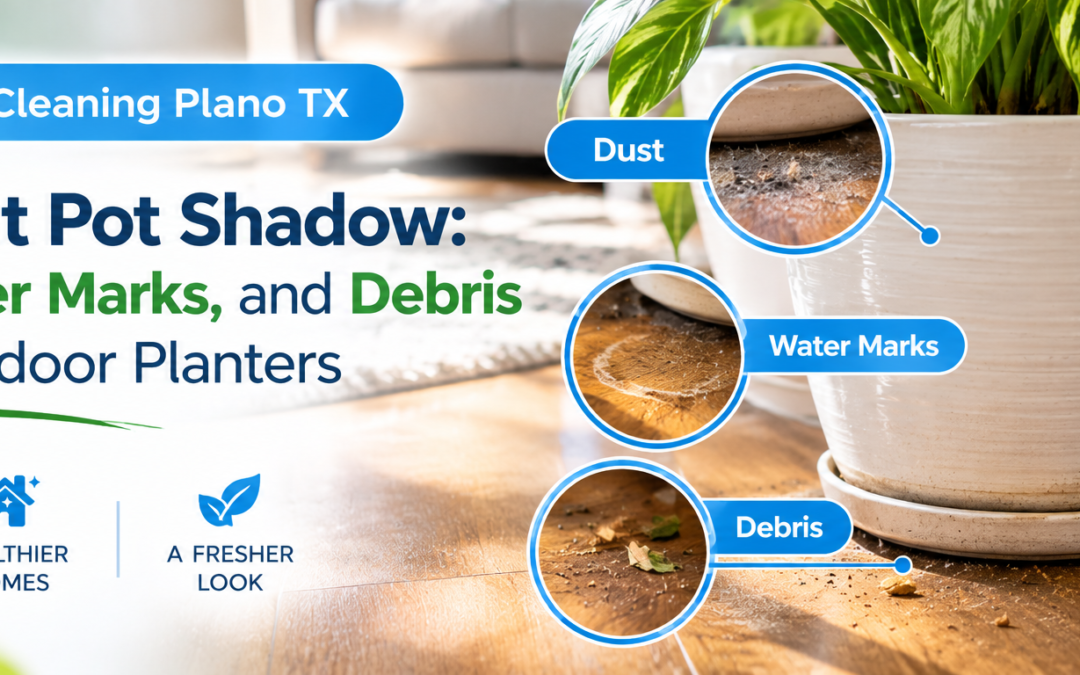
Indoor plants bring color, texture, and life into a home. Whether they sit on a windowsill, decorate a coffee table, or brighten a quiet corner, planters can make a room feel more inviting. However, there is one small cleaning problem many homeowners overlook: the hidden mess beneath the pot. For homeowners looking for House Cleaning Plano TX, understanding how dust, water marks, soil particles, and trapped debris accumulate beneath indoor planters can help protect furniture and keep living spaces looking their best.
A plant pot may appear clean from the outside, but its base can hide a ring of dust, dried mineral deposits, damp soil, and tiny pieces of fallen leaves. When a planter stays in the same position for weeks or months, these materials collect in an area that rarely receives attention during routine cleaning.
The result is what we call the plant pot shadow: a circular outline, discoloration, or dusty patch left behind when the planter is lifted. This hidden mess can make an otherwise clean surface look neglected. Fortunately, a few simple maintenance habits can help prevent buildup and protect the surfaces beneath indoor plants.
What Is the Plant Pot Shadow?
The plant pot shadow is the visible or hidden residue that develops underneath and around an indoor planter. It often becomes noticeable only after someone moves the pot to dust, rearrange decorations, or water the plant.
Unlike ordinary dust on an open tabletop, this debris is trapped beneath an object. Air movement may carry dust across the room, but the planter creates a sheltered area where particles settle and remain undisturbed.
Over time, several types of residue can develop in the same location:
- Dust and lint: Fine particles settle around the pot’s base and mix with fibers from clothing, upholstery, and nearby rugs.
- Soil and potting mix: Small particles escape through drainage holes or spill during watering and repotting.
- Water marks: Moisture can leave visible rings, especially when water evaporates and minerals remain behind.
- Organic debris: Fallen leaves, dried stems, and decomposing plant material can collect around the planter.
- Sticky residue: Fertilizer spills, plant sap, or damp soil can make dust cling to the surface.
These materials may be easy to overlook individually, but together they can create a noticeable ring or patch beneath the planter.
Why Dust and Debris Collect Beneath Indoor Planters
1. Planters Create Hidden Dust Traps
Dust naturally settles on horizontal surfaces. When a planter sits on a shelf, desk, side table, or countertop, the area underneath becomes difficult to reach during everyday cleaning.
A quick wipe around the pot may remove visible dust while leaving the protected area untouched. This is particularly common when several decorative objects sit close together.
Regular Plano cleaning services can help homeowners address these overlooked areas as part of a broader cleaning routine. Moving lightweight decorations, dusting beneath them, and returning them to their original positions helps prevent small deposits from becoming stubborn buildup.
2. Water Escapes During Plant Care
Watering is one of the most common causes of marks beneath indoor plants. Even careful watering can produce drips that travel down the outside of a pot or collect beneath its saucer.
If the water contains dissolved minerals, evaporation may leave a pale, chalky ring. On other surfaces, moisture may cause dull patches, discoloration, or damage to the finish.
Wooden furniture deserves particular attention because prolonged moisture exposure can damage protective coatings or leave marks that ordinary dusting will not remove. Laminate, stone, glass, and metal surfaces also require cleaning methods suited to their specific finishes.
Homeowners using a maid service Plano TX can benefit from including plant stands, saucers, and decorative surfaces in their regular household maintenance checklist.
3. Soil Particles Escape From the Pot
Potting soil is lightweight, and even a small amount can spread farther than expected. Soil may escape through drainage holes, collect beneath a saucer, or spill when a plant is moved.
Dry soil creates loose debris that can be swept or vacuumed away carefully. Damp soil, however, may stick to a surface and leave a thin film that attracts additional dust.
Overwatering can make this problem worse by allowing water and fine soil particles to mix beneath the planter. Checking the pot’s drainage system and cleaning the saucer regularly can help prevent repeated buildup.
4. Organic Material Breaks Down Over Time
Indoor plants naturally shed leaves and small pieces of plant material. These fragments can become trapped beneath pots, especially when plants sit near windows or in areas with limited airflow.
As organic material dries and breaks apart, it mixes with dust and soil. The resulting debris can be more difficult to remove with a single quick wipe.
When cleaning around plants, inspect the surrounding surface for dried leaves, stems, and other loose material before using a damp cloth.
How the Plant Pot Shadow Affects Different Surfaces
The same planter can create different cleaning challenges depending on where it sits. Understanding the surface helps determine the safest way to remove residue.
Wooden Tables and Cabinets
Wood can be sensitive to moisture, particularly when the protective finish is worn or damaged. A planter that leaks repeatedly may leave a ring or dull patch that becomes more noticeable over time.
Use a soft, dry microfiber cloth for routine dust removal. If additional cleaning is necessary, use a slightly damp cloth only when appropriate for the finish, and dry the surface immediately.
Avoid soaking wood or applying vinegar, abrasive powders, or harsh cleaners without confirming that they are suitable for the furniture’s finish.
Glass and Ceramic Surfaces
Glass and glazed ceramic generally allow easier removal of dust and loose soil. However, dried water marks may remain visible after the surrounding area has been wiped clean.
Use a soft cloth and a surface-appropriate cleaner. For glass, a suitable glass cleaner can help remove smudges. For ceramic, mild soap and water may be sufficient when the manufacturer permits it.
Pay attention to the underside of the planter and its saucer, since residue can transfer back onto the clean surface when the pot is returned.
Natural Stone Countertops
Marble, limestone, and other natural stones may react poorly to acidic cleaners. Even familiar household ingredients can dull or damage certain finishes.
Use a cleaner specifically labeled as safe for the stone in question. Blot moisture promptly, and avoid scrubbing with abrasive pads.
If a mineral ring remains after ordinary cleaning, do not assume that stronger chemicals will solve the problem. The mark may require a surface-specific treatment.
Shelves, Desks, and Painted Surfaces
Painted wood, laminate, and finished shelving can develop visible outlines when dust combines with moisture or residue from a planter.
Start with gentle dust removal and follow with a cleaner approved for the material. Test any unfamiliar product in an inconspicuous area before treating the entire surface.
When possible, place planters on protective trays designed to catch excess water and soil.
A Step-by-Step Method for Cleaning Beneath Indoor Planters
Removing the plant pot shadow does not require an elaborate process. The key is to identify the residue, choose an appropriate cleaning method, and ensure the area is completely dry before replacing the planter.
Step 1: Move the Planter Carefully
Lift the pot rather than dragging it across the surface. Dragging may scratch furniture or grind soil particles into the finish.
Place the planter on a stable, protected area while cleaning. If it is large or heavy, ask for assistance rather than risking damage or injury.
Step 2: Remove Loose Debris
Use a soft brush, microfiber cloth, or suitable vacuum attachment to remove dust, dry soil, and fallen plant material.
Avoid pushing loose soil into corners or rubbing gritty particles across delicate surfaces. Removing these particles first reduces the chance of scratching during the next step.
Step 3: Identify the Type of Mark
Examine the exposed area before applying a cleaner.
- A loose gray layer is likely ordinary dust.
- Brown or black particles may be soil or decomposed plant material.
- A pale, crusty ring may indicate mineral deposits.
- A darkened area on wood may signal moisture-related discoloration or finish damage.
The appearance of a mark can provide clues, but it cannot always identify the exact cause. When a stain appears embedded in the surface, use a material-appropriate approach rather than repeatedly scrubbing it.
Step 4: Clean With the Right Product
For ordinary dust and light residue, begin with the gentlest method suitable for the surface.
A slightly damp microfiber cloth may work on many sealed surfaces, while wood and natural stone may require specific products or a drier approach. Follow product directions and avoid mixing cleaning chemicals.
If a mineral deposit remains, select a treatment approved for the surface rather than automatically using an acidic solution.
Step 5: Dry the Surface Completely
Drying is essential. Leaving moisture beneath a planter can recreate the same problem after the pot is returned.
Use a clean, dry cloth and check the area around the saucer. Make sure no water remains trapped underneath the planter.
Step 6: Clean the Pot and Saucer
Inspect the planter’s underside and the inside and outside of its saucer. Remove loose soil and residue, then dry the components as appropriate for their materials.
A clean tabletop will not stay clean for long if the pot or saucer continues transferring dirt and moisture onto it.
Step 7: Replace the Planter With Protection
Return the planter to a dry surface. Use a stable, waterproof tray or saucer suited to the pot’s size and drainage requirements.
Protective pads may help prevent scratches, but they should not trap moisture against a vulnerable surface. Check them periodically and clean underneath them, too.
Preventing the Plant Pot Shadow From Returning
Cleaning the area once is helpful, but consistent maintenance prevents the same ring from developing again.
Establish a Weekly Plant-Care Cleaning Routine
Include a quick inspection of indoor planters in your weekly household routine. Lift lightweight pots when safe, remove dust, and check the condition of the saucer.
A simple checklist can include:
- Dusting around and beneath planters.
- Removing loose soil and dried leaves.
- Checking for leaks and overflowing saucers.
- Wiping away fresh water spills.
- Inspecting furniture for discoloration or scratches.
- Drying the surface before replacing the pot.
For households with many plants, cleaning a few planters at a time can make the task easier to maintain.
Water Plants Without Creating Extra Mess
Water carefully and allow excess water to drain into an appropriate container. Empty standing water from saucers when suitable for the plant’s watering requirements.
Avoid leaving pots sitting in excess water unless the plant’s care instructions specifically require that arrangement. Proper watering practices can reduce moisture-related residue and help protect furniture.
Use Properly Sized Saucers
A saucer should accommodate the planter and catch excess water without overflowing. Check that it is intact and does not have cracks that allow moisture to escape.
For planters placed on valuable furniture, consider a waterproof protective tray that provides an additional barrier between the pot and the surface.
Rotate Cleaning Tasks Throughout the Home
Indoor plants often sit beside picture frames, lamps, books, and other decorative objects. These items can create similar hidden dust pockets.
During routine cleaning, move manageable objects, dust beneath them, and return them carefully. This helps keep the entire surface clean rather than simply wiping around the visible items.
When a Regular Cleaning Routine Needs Extra Attention
Some plant pot shadows are more difficult to remove than others. Repeated moisture exposure, accumulated mineral deposits, and neglected soil residue may require additional attention.
A few signs that an area needs more than routine dusting include:
- A ring that remains after gentle cleaning.
- Sticky residue that repeatedly attracts dust.
- A musty smell around a planter or saucer.
- Swelling, peeling, or discoloration on wooden furniture.
- Soil or mineral deposits that have hardened over time.
Do not continue scrubbing if the surface begins to look dull or damaged. The issue may involve the finish itself rather than dirt sitting on top of it. In those cases, consult the furniture or surface manufacturer’s care guidance or seek appropriate restoration advice.
Homeowners balancing busy schedules may also find it useful to include these less obvious areas in their broader cleaning plans. Residential cleaning Plano providers can help maintain everyday surfaces, while deep cleaning Plano TX services may be appropriate when a home needs more detailed attention to accumulated dust and neglected spaces.
How Professional Cleaning Helps Keep Decorative Areas Looking Fresh
Decorative objects often receive attention because they are visible, while the surfaces underneath them receive less frequent care. Over time, this can create a difference between how clean a room looks at first glance and how clean it actually is.
Professional cleaners generally work through surfaces and accessible areas systematically, helping address dust around furnishings, decorative items, baseboards, and other easily overlooked spots. Homeowners should communicate any delicate materials, valuable furniture, or special plant-care requirements before cleaning begins.
Depending on household needs, cleaning company Plano TX searches may lead homeowners to compare routine maintenance, detailed cleaning, and specialized services. The right choice depends on the condition of the home, the surfaces involved, and the level of cleaning required.
For example, professional cleaners Plano homeowners hire for recurring maintenance can help keep everyday dust under control. A more detailed visit may be useful when planters, decorative accessories, and other items have remained in place for an extended period.
The same attention to detail can be useful in other settings. Office cleaning Plano TX services may need to address desk plants, reception-area decorations, and planters near windows. In commercial spaces, commercial cleaning Plano routines can include checking decorative surfaces where dust and water residue are easy to miss.
Choosing Cleaning Services for Different Household Needs
The plant pot shadow is only one example of how hidden residue can develop around everyday belongings. Homeowners may have other cleaning priorities depending on their schedules, property condition, and upcoming plans.
For people comparing house cleaning Plano Texas options, it helps to consider whether they need occasional upkeep or a regular schedule. Recurring cleaning Plano can support consistent maintenance, while weekly cleaning Plano TX may suit households with pets, children, frequent visitors, or numerous decorative items.
Other situations may call for different services:
- Move out cleaning Plano: Useful when preparing a property for inspection, a landlord walkthrough, or a change of residence.
- Move in cleaning Plano TX: Helps prepare accessible surfaces and living areas before furniture and belongings are fully arranged.
- Apartment cleaning Plano: Supports maintenance in smaller homes where tabletops, shelves, and windowsills may serve several purposes.
- Office cleaning Plano TX: Helps maintain workspaces, reception areas, and shared surfaces.
- Post construction cleaning Plano: Addresses construction-related dust and debris after renovation work, using appropriate methods for the affected materials.
- Carpet cleaning Plano TX: Focuses on embedded dirt and stains in carpeted areas rather than replacing the need for routine hard-surface care.
If budget is an important consideration, homeowners may compare affordable maid service Plano options and affordable deep cleaning services in Plano based on the scope of work, included tasks, and frequency of service.
People looking for best cleaners in Plano TX, a top cleaning company Plano Texas, or reliable house cleaning services in Plano TX should review service descriptions, customer feedback, insurance information where applicable, and the company’s approach to delicate surfaces.
Some households also search for same day cleaning Plano TX when unexpected guests or scheduling changes create an immediate need. Availability varies, so it is best to confirm the timing and the specific tasks a provider can accommodate.
For homeowners who prioritize lower-impact products, eco friendly cleaning Plano searches can help identify providers that offer suitable environmentally conscious cleaning options. Always confirm that the products used are compatible with the materials being cleaned.
Whether someone needs a routine visit or more detailed maintenance, a professional maid service near Plano Texas can be evaluated based on the household’s specific priorities. Those seeking trusted home cleaners in Plano Texas should communicate expectations clearly, particularly when delicate furniture, indoor plants, or specialty surfaces are involved.
Likewise, move out cleaning service in Plano TX may be appropriate when a property needs attention before its next occupant arrives. For more extensive cleaning needs, residential cleaning Plano and deep cleaning Plano TX services may offer different levels of coverage, so reviewing the included tasks is essential.
For businesses and households with changing requirements, office cleaning Plano TX, commercial cleaning Plano, and post construction cleaning Plano should be considered according to the type of space and the condition of the surfaces. Selecting the correct service helps ensure that cleaning efforts address the actual problem rather than relying on a one-size-fits-all approach.
Keep Small Cleaning Problems From Becoming Big Eyesores
The plant pot shadow may seem insignificant, but it illustrates an important principle of home maintenance: objects that stay in one place can conceal the dirt and moisture that gradually affect the surfaces beneath them.
A simple combination of lifting planters carefully, removing loose debris, cleaning with suitable products, drying surfaces thoroughly, and using protective saucers can make a noticeable difference. Regular inspections also help identify early signs of moisture damage before they become more difficult to address.
A clean home is not just about the surfaces everyone sees. It is also about maintaining the hidden spaces beneath decorations, furniture, and everyday belongings.
For homeowners exploring House Cleaning Plano TX, the plant pot shadow is a useful reminder to look beyond visible dust and pay attention to the small details that preserve a home’s appearance. With consistent care and the right cleaning methods, indoor plants can continue brightening a room without leaving unwanted rings, residue, or debris behind.
Contact us at 972–254–8858 or visit https://dustbunniesinc.net/plano-tx/ to book your service.